
PROJECT SNAPSHOT
AUDIENCE: Tagging Specialists, Quality Assurance Specialists, and Sales Team at large scale commercial tree nursery
ROLE: Instructional Designer, eLearning Developer, Business Performance Consultant
RESPONSIBILITIES: Needs Analysis, Action Mapping, Visual Design, Prototyping, Development, Evaluation Planning
TOOLS: Articulate Rise, Canva, Claude AI, Google Drawing, Google Docs
Problem
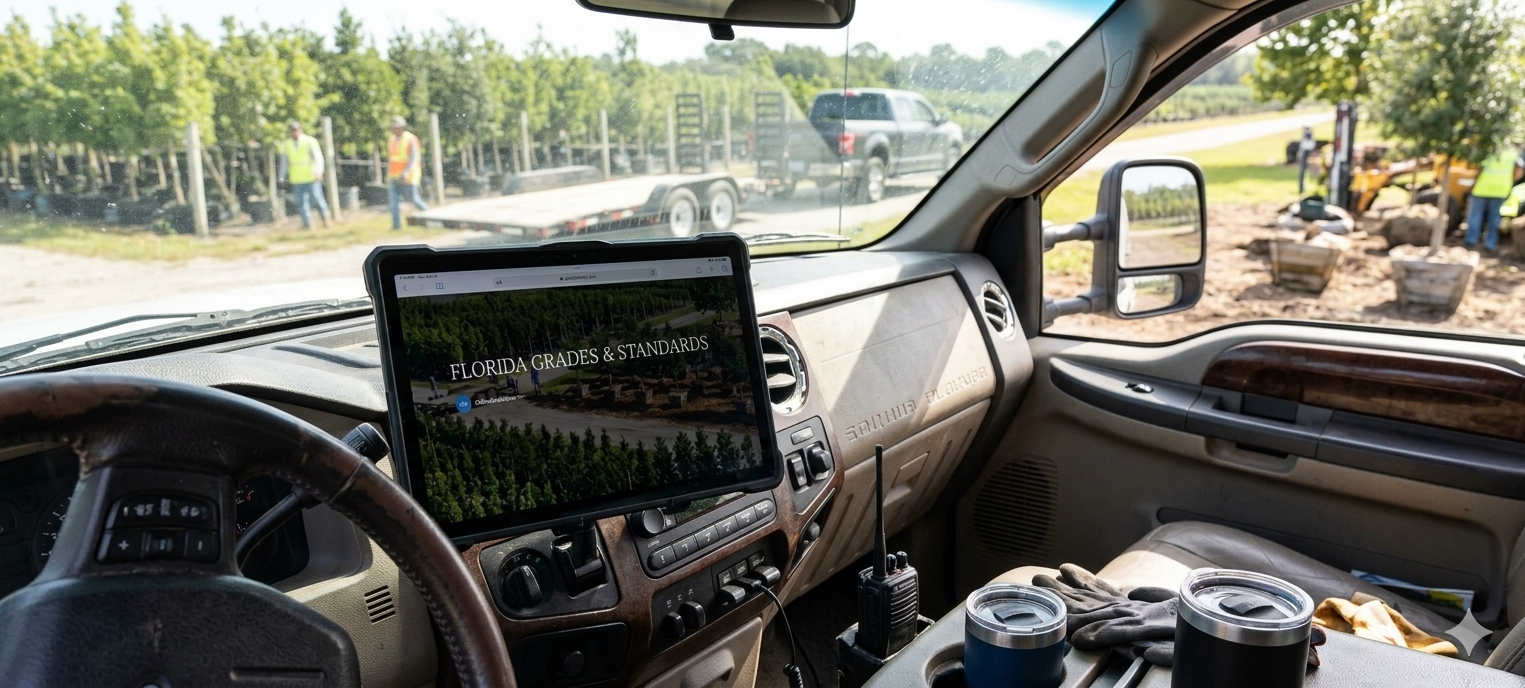
The Florida Department of Agriculture and Consumer Services establishes rigorous grading standards for nursery trees and shrubs sold commercially. These Florida Grades and Standards (FGS) define quality tiers that directly affect a plant's price, its viability after planting, and its long-term structural stability — making accurate classification a business-critical skill.
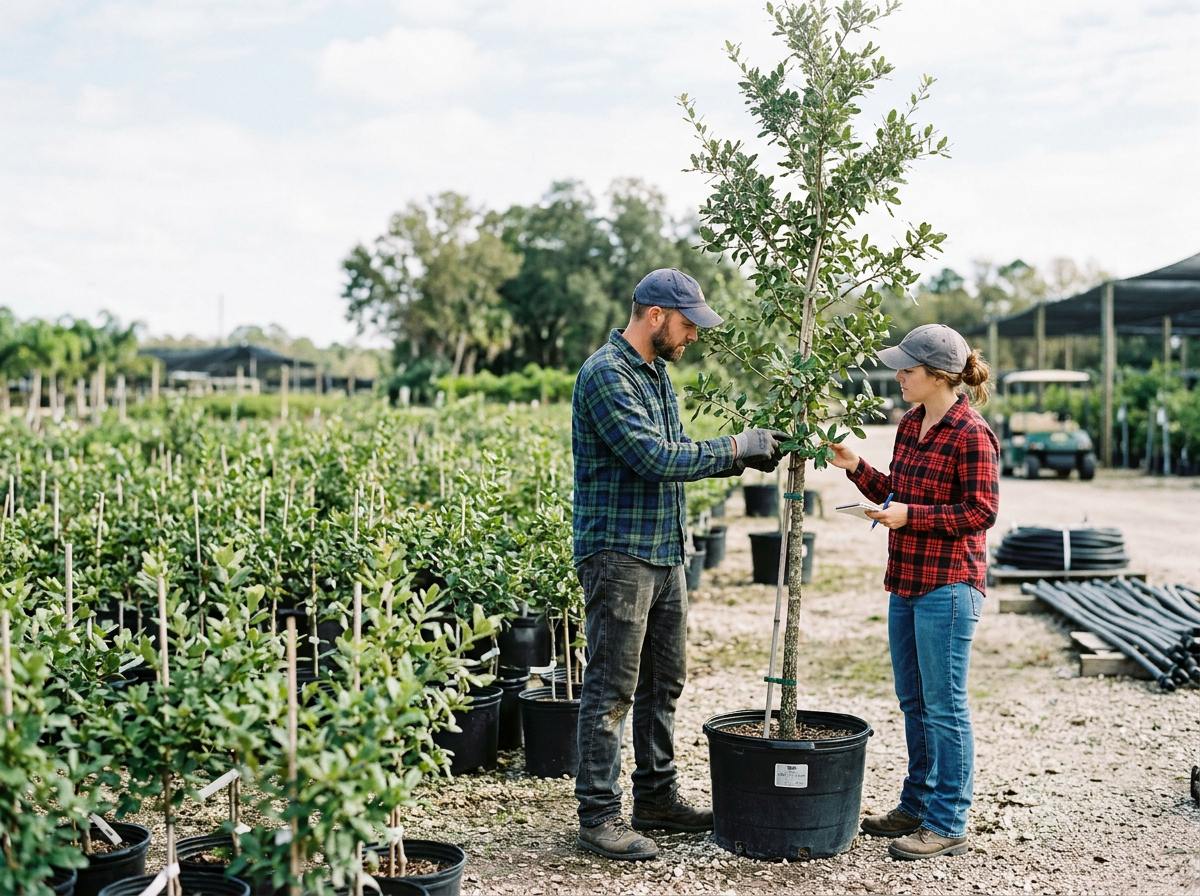
For a large commercial nursery, that responsibility falls on tagging and quality assurance specialists working daily across thousands of specimens. With team members ranging from seasoned graders to new hires, the client was experiencing significant inconsistency in how those standards were being applied in the field. The consequences were measurable: grade mismatches between a tree's actual quality and its invoiced price led to a growing volume of customer claims and refund requests, eroding both client satisfaction and profit margin.
Solution
Following a needs analysis conducted with subject matter experts and key stakeholders, a three-part learning solution was scoped and approved. The centerpiece is a modular eLearning course that walks learners through each step of the FGS grading matrix — one criterion per module — building the judgment and pattern recognition field graders need to classify specimens accurately and consistently.
Because grading is fundamentally a visual, hands-on skill performed outdoors, the course prioritizes applied learning over content delivery. Each module pairs clear explanations of the standard with annotated diagrams, worked examples using real tree measurements, and scenario-based practice that replicates the decisions graders make in the field.
Needs Analysis &
Action Map
Before any design decisions were made, a structured needs analysis was conducted through SME interviews and stakeholder meetings. The root cause was clear: the performance gap was a knowledge and judgment problem concentrated at the very first step of the fulfillment workflow — specimen classification by tag team specialists.
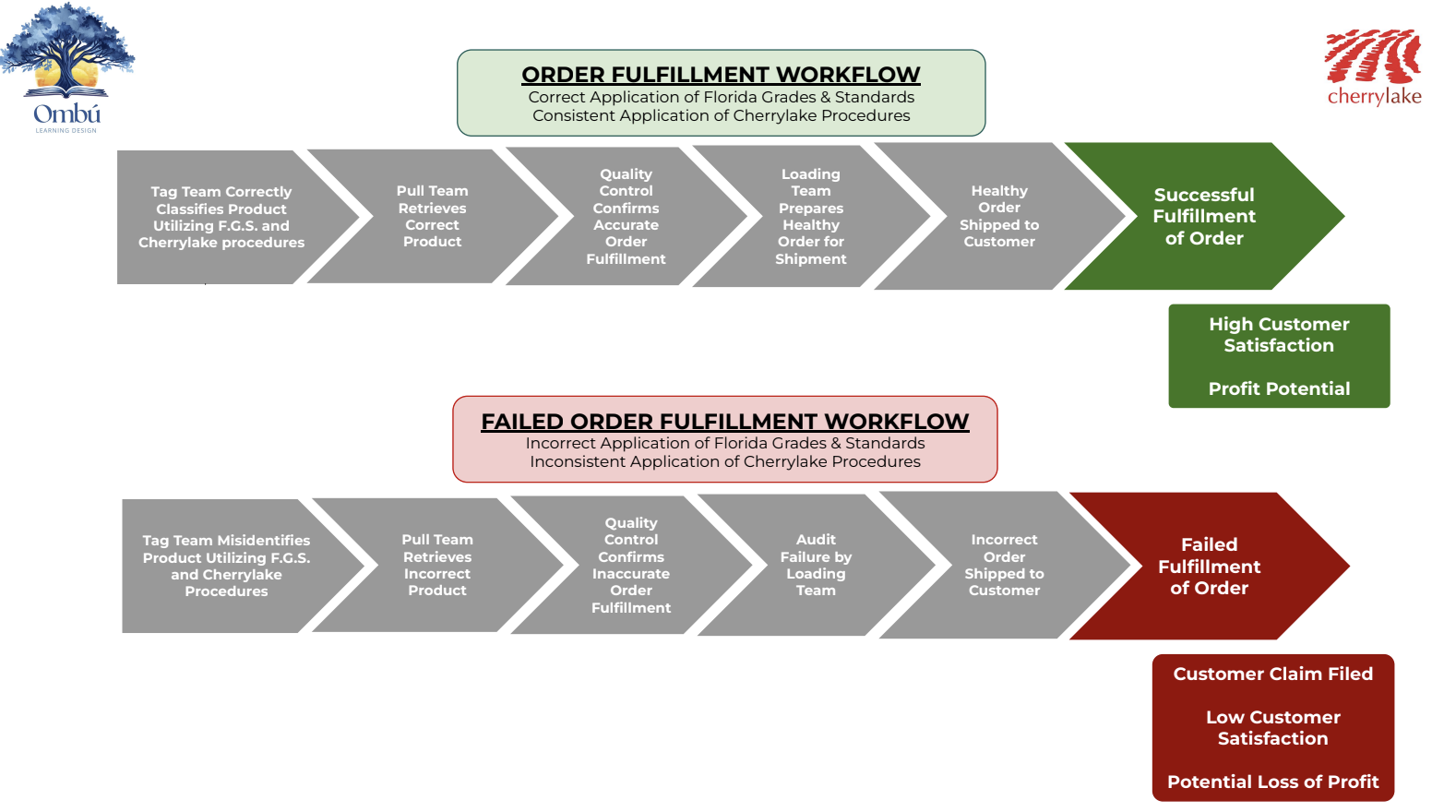
Using Cathy Moore's action mapping framework, the business goal was traced backward to isolate the specific field decisions driving failed order fulfillment. The resulting workflow map illustrated two parallel paths: a successful fulfillment chain beginning with accurate FGS classification, and a failed chain beginning with misidentification — cascading through every downstream role before reaching the customer as an incorrect order, a claim, and a loss of profit.
That map became the anchor for every design decision. Rather than building training around the FGS document itself, the action map kept the focus on what specialists need to do differently in the field — scoping the solution tightly around the decisions that matter most to the business.
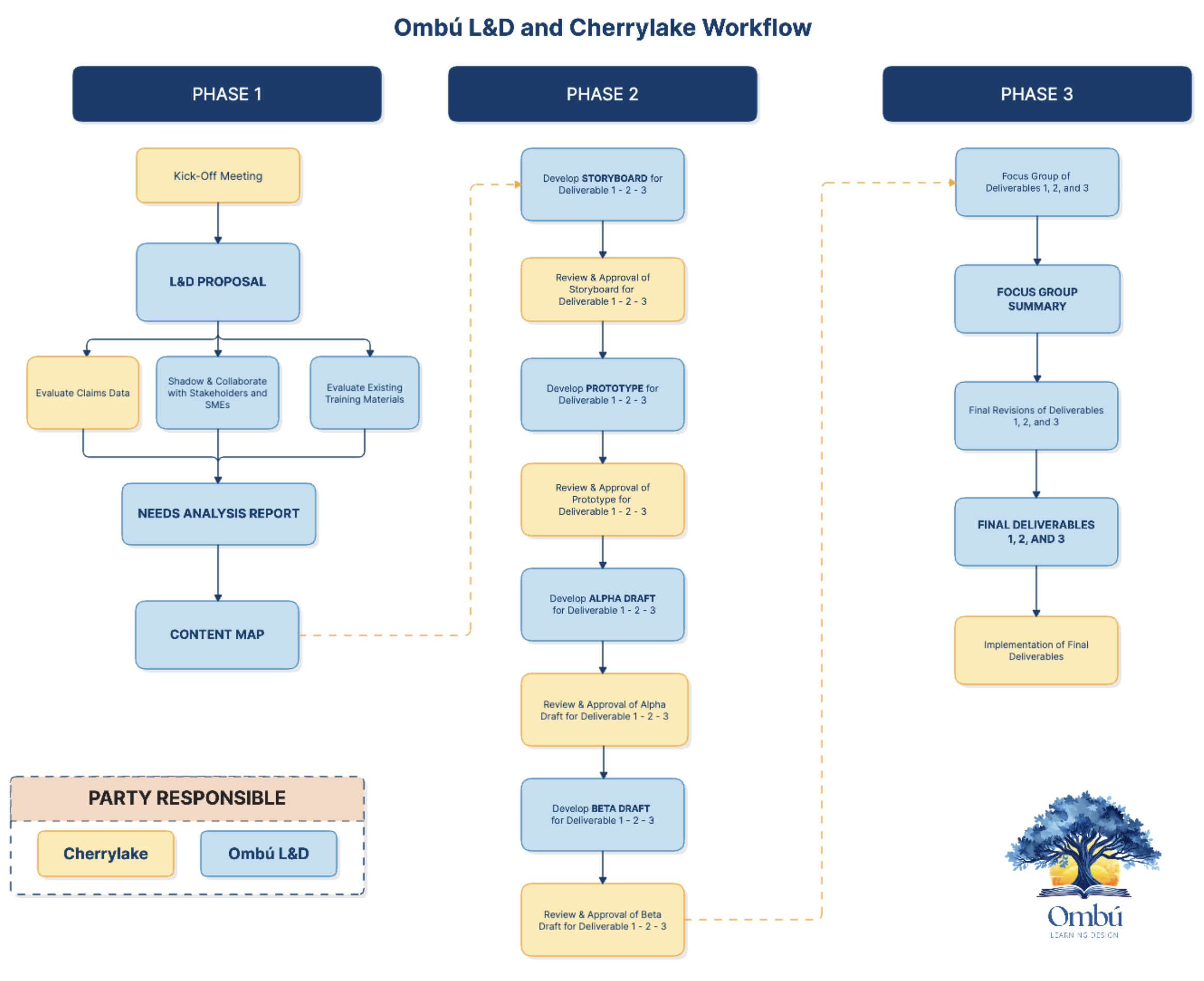
Workflow of Project
Based on the findings from the initial Needs Analysis, I developed a project workflow using the ADDIE model to guide the project from analysis through implementation and evaluation.
Phase 1: Analysis
Analyzed existing training materials, processes, and performance data to identify the root causes of inconsistent grading.
Collaborated with SMEs, stakeholders, and representative learners to identify knowledge and skill gaps
Analyzed internal claims data to understand the business impact of grading errors.
These findings informed the Needs Analysis Report and Content Map, which established the foundation for the learning solution.
Phase 2: Design & Development
Waterfall development approach with structured review and approval points throughout the process.
Storyboards, prototypes, alpha drafts, and beta drafts were developed and reviewed by stakeholders before progressing to the next stage.
Phase 3: Implementation & Evaluation
Following focus group testing and final revisions, the learning solution was implemented across targeted departments.
I established monthly monitoring of claims data to evaluate the impact of the training on employee performance and business outcomes.
Following initial implementation, the client experienced a 30%+ reduction in customer claims, demonstrating a measurable business impact from the learning intervention.
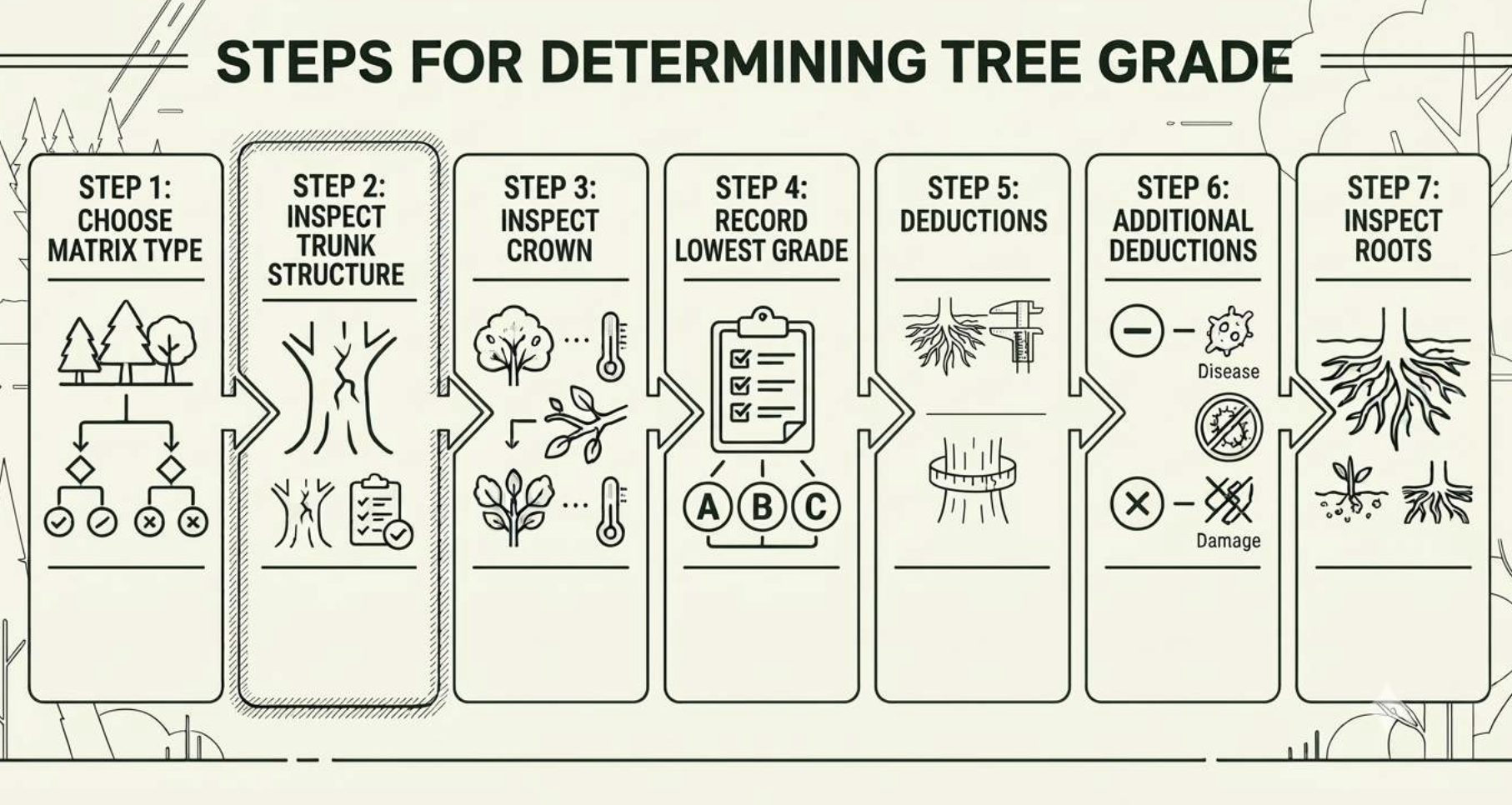
Learning Experience Structure
Because accurate grading requires learners to evaluate multiple criteria in sequence, I expanded the prototype into a modular learning experience covering the complete grading workflow.
Rather than presenting the entire process at once, I chunked the content into individual modules, allowing learners to build their knowledge and judgment incrementally.
The eLearning solution emphasized visual examples, applied practice, and scenario-based decision-making to mirror the judgment required during real-world field grading, for this prototype that is Step 2- Inspecting Tree Trunk Structure
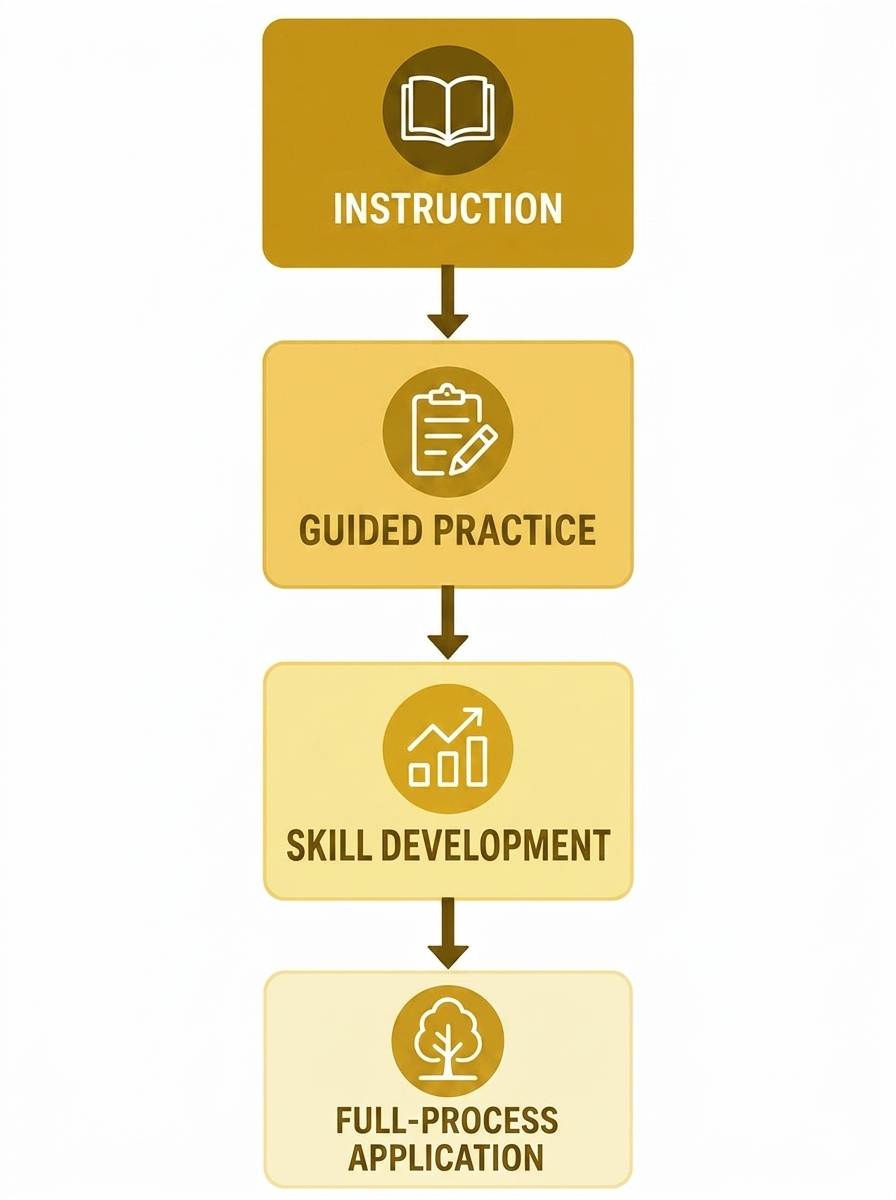
The learning experience culminates in an authentic, real-world application assessment. Rather than assessing learners solely through knowledge-based questions, learners must apply the complete FGS grading process to five trees, independently evaluating each specimen and determining the appropriate grade.
The result is a learning experience designed not simply to help employees know the Florida Grades & Standards, but to help them apply the standards accurately and consistently in the field.

Evaluation & Feedback
To demonstrate the success of this learning solution, data was collected across operational metrics, behavioral shifts, and stakeholder feedback over a 90-day post-implementation period. The initiative achieved exceptional outcomes in both standardization and financial impact.
30% Reduction in Claims: Mislabeling errors dropped significantly within the first three months, directly protecting bottom-line revenue.
Standardized Expertise: Supervisor evaluations confirm all learners achieved an equal baseline of mastery, successfully eliminating performance variance between novice and veteran staff.
Targeted Gap Resolution: Involving learners in the co-development process allowed us to isolate and proactively eliminate the most common industry misconceptions.